
We Deliver — Free in Palm Beach for Orders Over $49.99

Hamptons Team | 2 days ago

How Do Eastern and Western Drinking Cultures Differ?

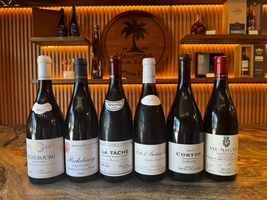
To a classical European collector, a $3,000 bottle of Grand Cru Burgundy demands a slow, deliberate courtship. It is a ritual of oversized crystal stemware, subtle nods, and quiet reverence as notes of black cherry and wild truffle unfold over hours.


Across the globe, however, that exact same bottle meets a very different fate.


The glass is still fine crystal, and the initial pour still carries the romance of a first date—swirling, sniffing, and admiring the vintage. But as the banquet progresses, an unspoken rule takes hold: every drop must disappear, usually in a sped up fashion. Quiet contemplation gives way to spirited toasts, and delicate sipping turns to gulping. In Chinese dining culture, this is gan bei (干杯 "bottoms up")—a social commitment to empty your glass, honor your host, and celebrate togetherness.


To anyone trained in traditional wine service, this collision of luxury and speed breaks the textbook and gives sommeliers hives. Yet, having spent years in Asia before specializing in fine wine on Palm Beach Island, I view that drained glass differently. Where one culture sees a missed tasting note, another sees an unmistakable gesture of camaraderie and respect.

From 110-Proof Truth Serum to 14% ABV Diplomacy

Historically, high-stakes corporate banquets relied on baijiu (白酒). At 110-proof, China’s iconic sorghum spirit served a singular purpose: stripping away polite boardroom facades in under an hour. In international business, a deal is rarely sealed by signatures alone; it demands a moment where guards drop and true character emerges. How someone handles their liquor—whether they match their host toast-for-toast and hold their composure—remains a traditional test of trust.


As a new generation took over the international trade stage, luxury red wine offered a practical upgrade. Grand Cru Bordeaux and benchmark Burgundy brought instant prestige to the table while solving a major operational problem. At these dinners, the custom is that every guest brings a bottle of something, and the group has to finish it all. Even if you swap out the baijiu (白酒), taking down five or six bottles of whisky is detrimental. Fine wine drops the ABV to a manageable 14%, allowing you to execute dozens of toasts while keeping your composure.


As one seasoned collector friend, Jenny, notes: “My best strategy for survival is convincing everyone to bring wine.”

The Modern Tribe and the Five Châteaux

Historically, human bonds were forged in shared trials, where trust was earned through strain. Today, the banquet table serves a similar function. The venue has evolved, but the instinct to build a tribe remains: navigate the night, protect your own, and finish together.


In Chinese dining culture, this camaraderie takes on tactical form through dang-jiu (挡酒)—the art of "shield-bearing," where a friend steps in to take a toast on your behalf when you have reached your limit. Who will take the drink for you? Who will ensure you make it home on two feet? At a table governed by honor, surviving the evening is never a solo mission; it is a shared effort of loyalty and care.


The instinct to gather a tribe extends far beyond boardroom doors—and occasionally defies medical advice. A friend of mine recently marked his 41st birthday by putting his inner circle through a grueling triathlon, then rewarding their collective joint damage by uncorking all five First Growth Bordeaux Châteaux: Lafite, Margaux, Latour, Haut-Brion, and Mouton Rothschild.


Opening those five bottles was his way of thanking the crew who ran the race beside him. Whether you measure time in ibuprofen, miles, or vintages, the point remains: the greatest wines are made for creating memories with your people.

The New Luxury: Fine Wine Meets Pop Vitality

That exact energy—the collision of rare, high-heritage allocations with unbuttoned, high-octane human connection—is rarely captured on a museum wall. But it is precisely what animates the work of Tokyo-based artist Campbell La Pun,


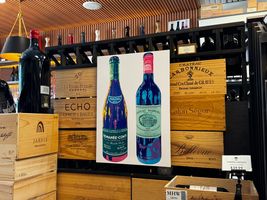
Just as gan bei-ing a benchmark allocation shocks traditionalists, La Pun’s canvases mash up world-class wine iconography with neon stencils, aerosol spray, and pop vitality. His work is the visual counterpart to that "bottoms up" moment: stripping away cold formality and replacing it with human energy.


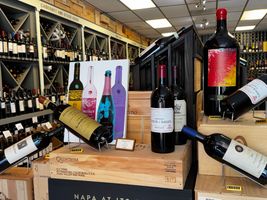
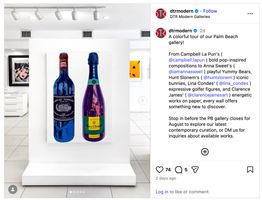
Hamptons Palm Beach is presenting a curated collection of studio-released prints and small original works—all at $500—by the Tokyo-based Australian artist, now on display at our boutique. For collector-level canvases or custom commissions, we direct our clients right down Worth Avenue to our friends at DTR Modern Galleries, Palm Beach's premier home for modern masters.

Sincerely yours,

Hamptons Team

More Posts

<p>The Gravity of the Tin: Why You Need to Stop Rationing Caviar</p><p>The Gravity of the Tin: Why You Need to Stop Rationing Caviar</p>

The Gravity of the Tin: Why You Need to Stop Rationing Caviar

We have all been there. You know caviar as the polite dollop resting on a cold blini, or a decorative garnish on a catering platter. It was salty, it was fancy, and it was over in a single, fleeting bite. You walk away thinking, “It’s good... but is it really worth the hype?”


I used to think the exact same thing. In fact, I completely wrote caviar off for years. Growing up, my grandmother would tell me stories that sounded like pure mythology:


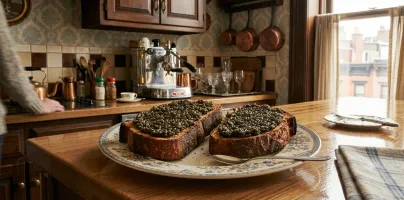
"Back in the '80s, my absolute favorite afternoon snack was two warm slices of bread, spread with a thick, glistening layer of Caspian Beluga caviar. Especially when I was pregnant with your dad, I would finish lunch and just count down the minutes until 4:00 PM so I could have my daily treat. It was my happiest ritual."


For decades, she dreamed of those days. And for decades, I didn’t quite get it, because what she casually enjoyed had become completely impossible.


To put her daily habit into perspective: during the famous "Beluga Caviar War" of 1983 between Zabar's and Macy's in New York, a massive 14-ounce tin of wild Caspian Beluga retailed for around $119. Even with inflation, that’s about $380 in today’s money.


Today, if you wanted to buy a 14-ounce tin of purebred Beluga to casually spread on your afternoon toast, it would set you back nearly $4,000. Unless you have a casual quarter-million-dollar annual grocery budget, nobody is eating pure Beluga on a daily basis anymore.


But it wasn't just the price that made it impossible—the legendary quality itself had vanished.
<p>The Palm Beach Corkage Guide: Fees, Etiquette, and the Best BYOB Policies on the Island</p><p>The Palm Beach Corkage Guide: Fees, Etiquette, and the Best BYOB Policies on the Island</p>

The Palm Beach Corkage Guide: Fees, Etiquette, and the Best BYOB Policies on the Island

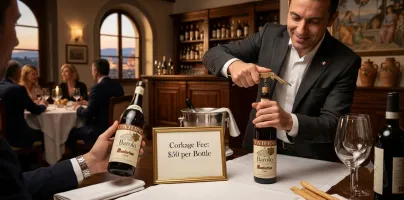
Around here, we are no strangers to precision when it comes to wine. At our Palm Beach boutique, our days are spent curating cases for everything from elegant backyard luncheons to grand weddings at the Flagler Museum. But just as often, the assignment is beautifully simple: a regular walks through our doors looking for that one perfect bottle to bring out to dinner that very evening.


Historically, taking a bottle from your cellar to a local dining room came with a side of guesswork, as corkage policies varied wildly by doorstep. That baseline is shifting toward welcome clarity. With Florida’s landmark SB 606 fee transparency law now in effect as of July 1, 2026, automatic operations charges must be clearly itemized on menus and receipts. Under this new legislation, restaurants provide upfront notice of their exact corkage fees, removing the mystery for collectors before the first cork is even pulled.


As the law brings these fee structures into the light, there has never been a better time for our community of collectors to brush up on the unspoken etiquette of BYOB. Done right, corkage isn't just a transaction—it’s a dynamic, two-way dialogue between an engaged diner and a world-class hospitality team, turning the bottle you meticulously selected into a shared conversation.


"Corkage gives restaurants an unexpected window into what guests are excited enough to purchase for themselves or gift to others," notes Megan, Sommelier at Harry’s West Palm Beach. "It helps us understand evolving tastes and can even influence future decisions about what deserves a place on the wine list."