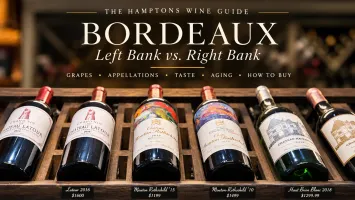
Left Bank vs. Right Bank Bordeaux: Which Red Wine Should You Buy?
Cabernet Sauvignon or Merlot? Discover how Bordeaux's two banks differ in flavor, structure, aging potential, and value—and how to choose the right bottle.
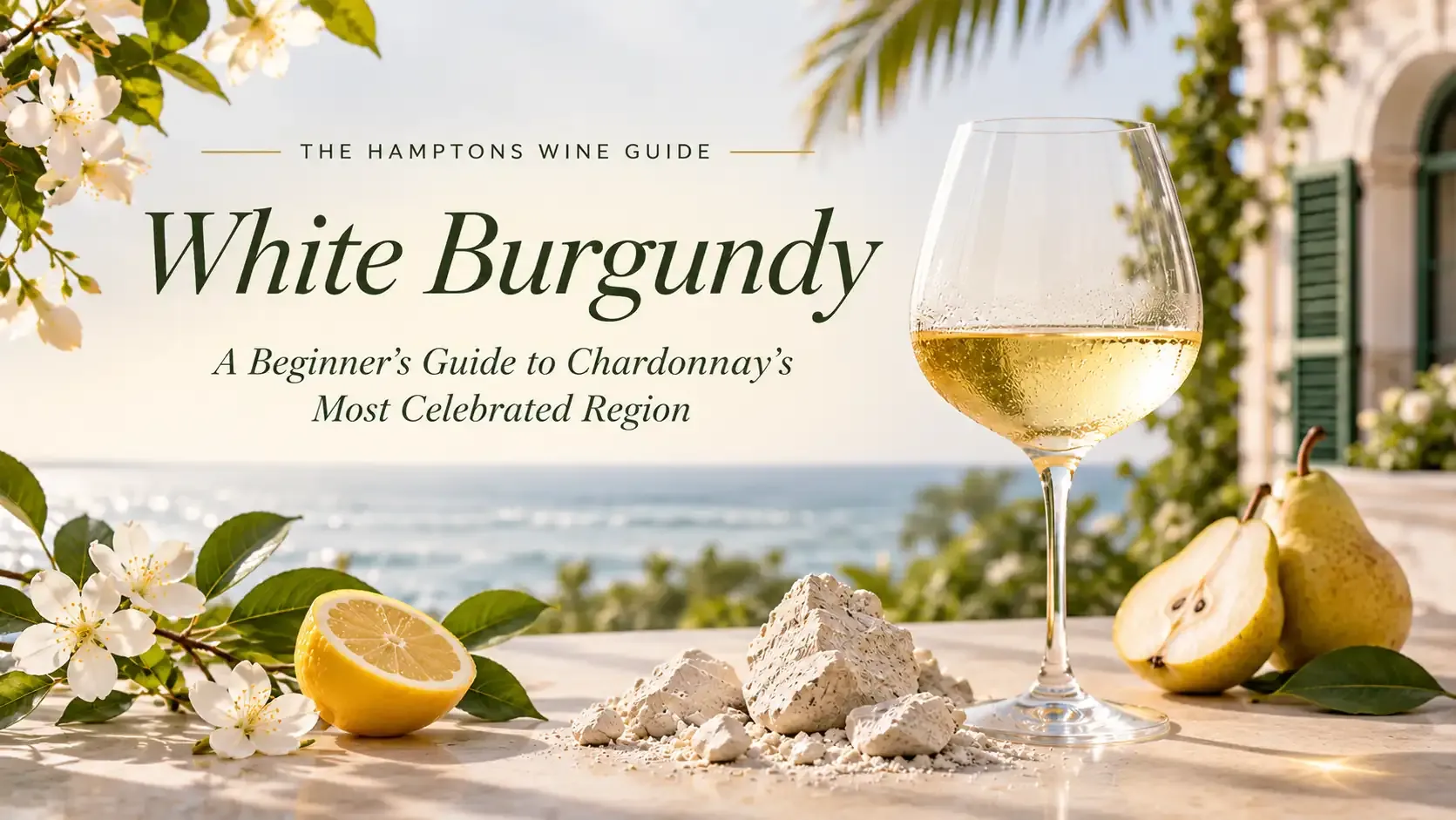
THE HAMPTONS WINE GUIDE
From crisp Chablis to textured Meursault, discover how to find a white Burgundy that fits your taste and budget.
What is the best white Burgundy for beginners? Start with Bourgogne Blanc for balance, Chablis for crisp acidity, or Mâcon-Villages for ripe fruit. All three can offer an approachable introduction to Burgundy Chardonnay without the price of a famous Grand Cru.
Names like Puligny-Montrachet and Meursault describe places, not grape varieties. That's part of Burgundy's appeal: Chardonnay can taste strikingly different depending on its vineyard, producer, and winemaking. At Hamptons Palm Beach Fine Wine & Spirits, sommelier Kevin recommends tasting contrasting bottles to discover your preferred style.
Kevin recommends three contrasting examples before investing in prestigious appellations: Paul Pernot for linear precision, Dupont-Fahn for fuller texture and an unusual Meursault-area vineyard story, and Domaine de la Meulière Chablis for crisp, citrus-driven mineral freshness.
From a domaine based in Puligny-Montrachet, this regional Bourgogne Blanc is a useful introduction to linear elegance, orchard fruit, bright acidity, and a precise, refreshing finish rather than pronounced creaminess. Explore the 2024 Paul Pernot bottle.
This Bourgogne-designated Chardonnay comes from the Meursault area and offers a compelling way to explore the relationship between vineyard location and appellation. Stories about the parcel's classification history circulate widely; the exact circumstances should not be presented as independently established without primary documentation.
Complete the tasting with 2023 Domaine de la Meulière Chablis. Its lively acidity, citrus notes, and stony impression contrast especially with Dupont-Fahn's rounder texture, while its cool-climate focus is distinct from Paul Pernot's Côte de Beaune-area expression.
Why these three? They help you compare different expressions of Chardonnay before spending more on prestigious appellations.
White Burgundy is white wine from France's Bourgogne region. The classic dry white styles in this guide are overwhelmingly made from Chardonnay, though Burgundy also makes white wines from other grapes, including Aligoté.
Chablis in the north often emphasizes citrus and acidity. The southern Mâconnais can show riper orchard fruit. Côte de Beaune villages such as Meursault and Puligny-Montrachet can produce complex wines with remarkable freshness, texture, and aging potential. These are broad tendencies, not guarantees: the producer and vintage matter.
Your existing preferences are the best starting point. If you like crisp Sauvignon Blanc or unoaked Chardonnay, begin with Chablis. If you want balance and versatility, choose Bourgogne Blanc. If you prefer ripe fruit and a rounder feel, explore Mâcon-Villages.
| If you enjoy… | Try… | Typical character |
|---|---|---|
| Crisp, refreshing whites | Petit Chablis or Chablis | Lemon, green apple, lively acidity, stony impressions |
| Balanced Chardonnay | Bourgogne Blanc | Orchard fruit, citrus, freshness, variable texture |
| Rounder, fruit-forward Chardonnay | Mâcon-Villages or Saint-Véran | Apple, pear, peach, often a fuller mouthfeel |
| Complex, textured Chardonnay | Selected Pouilly-Fuissé or Côte de Beaune | Layered fruit, depth, sometimes oak or nutty notes |
Chablis is often bright, citrus-driven, and refreshing. Many producers use little noticeable new oak, though vessel choices vary. “Mineral” is a tasting descriptor, not proof that stones or soil minerals are directly tasted in the glass.
Petit Chablis or Chablis? Petit Chablis can be a lively entry point. A carefully chosen Chablis may offer more concentration or length, but producer quality and vintage matter more than a simple rule. For a clear village-level introduction, try 2023 Domaine de la Meulière Chablis before considering Premier Cru wines.
Because Bourgogne Blanc is a regional designation, it covers a wide range of Chardonnay styles, from brisk and citrusy to rounder and subtly oaked. It is often a versatile first bottle for drinking on its own or with dinner.
Southern Burgundy's Mâconnais frequently delivers ripe apple, pear, and peach flavors while retaining refreshing acidity. It is an appealing direction for people who enjoy expressive Chardonnay without pronounced buttery oak flavors.
Burgundy offers fuller-bodied Chardonnay without requiring excessive oak or heaviness. Richness may come from fruit concentration, texture, lees aging, oak treatment, or a combination of factors.
Meursault is often associated with orchard fruit, hazelnut, citrus, and a rounded mouthfeel. Well-made examples can retain enough acidity to balance their richness. Its reputation can also bring a substantial price premium.
Puligny-Montrachet is often described through citrus, white flowers, orchard fruit, and a finely structured palate. It can be rich, but many examples emphasize freshness and definition rather than obvious butteriness.
In the Mâconnais, these appellations can deliver generous fruit, satisfying texture, and excellent complexity. The specific producer determines whether the wine leans toward freshness or richness.
Yes. Burgundy's most famous vineyards command high prices, but many rewarding wines come from regional appellations, Chablis, and less-famous villages. Treat the following as approximate shopping ranges, not fixed prices.
| Budget | Where to start | What to prioritize |
|---|---|---|
| Around $50 | Bourgogne Blanc, Petit Chablis, Chablis, Mâconnais | Producer, freshness, style fit |
| Around $75 | Selected Chablis Premier Cru, Saint-Véran, Pouilly-Fuissé | Complexity and value |
| Around $100 | Selected village-level Côte de Beaune and ambitious growers | Producer, vintage, vineyard |
A great regional Bourgogne Blanc can be more enjoyable than an expensive wine chosen only for its famous name. Prices and availability change; ask our team about current bottles.
One of the most interesting differences between Burgundy and Bordeaux is how the wines are identified. Bordeaux is traditionally château-driven; Burgundy is especially vineyard- and parcel-driven. This is a useful shorthand, not an absolute rule: land and producer skill matter in both regions.
In Bordeaux, a château's reputation and signature style often anchor the buying decision. Many red Bordeaux wines blend grapes such as Cabernet Sauvignon, Merlot, and Cabernet Franc, drawing on different parcels within an estate.
In Burgundy, the land itself is often front and center. Classic white Burgundy is predominantly Chardonnay, yet neighboring vineyards can produce strikingly different wines. A famous vineyard may be divided among multiple owners or growers, each making a separate wine from its own portion. Meanwhile, one domaine may farm parcels across numerous vineyards and bottle them individually.
The memorable difference: In Bordeaux, shoppers often start with the château. In Burgundy, shoppers often start with the appellation or vineyard, then compare the producers who work that land.
That makes Burgundy an especially compelling exploration of place, but it does not make the producer secondary. Farming, harvest timing, fermentation, and élevage can all shape the final wine.
Rather than prominently naming Chardonnay, Burgundy labels often emphasize producer, appellation, vineyard designation, and vintage. A bottle labeled Chablis identifies a place and an appellation; a Puligny-Montrachet label identifies another specific origin.
Regional, village, Premier Cru, and Grand Cru designations indicate different geographic and classification levels. Prestige may signal potential, but it does not guarantee that a wine will match your taste. Check the producer and vintage before paying more for a famous designation.
Both matter. Two producers working within the same appellation can make very different wines because of vineyard management, picking decisions, barrel use, and aging. For beginners, a practical strategy is to identify a style you like, then remember the producers whose wines consistently appeal to you.
Chablis: oysters, shrimp, sushi, and simply prepared fish often suit its bright acidity. Bourgogne Blanc: roast chicken, grilled fish, risotto, and lighter pasta dishes are versatile matches. Fuller Mâconnais or Côte de Beaune Chardonnay: lobster, mushrooms, creamy sauces, and richer poultry dishes can be excellent partners.
For a Palm Beach seafood lunch, choose a brisk Chablis for chilled shellfish or a more textured Chardonnay for butter-rich lobster or scallops. Match the wine's weight to the preparation, not just the main ingredient.
As a starting point, serve lighter styles at about 45–50°F (7–10°C) and fuller, more complex styles at about 50–55°F (10–13°C). Too cold can mute aromas; too warm can make the wine feel heavy. A standard white-wine glass is fine, and most approachable young bottles do not need decanting.
In Florida, protect bottles from direct sunlight, hot vehicles, and extended outdoor heat before serving.
For Kevin's three-bottle comparison, begin with Paul Pernot for a linear baseline, move to Dupont-Fahn for a broader, more textured Bourgogne Blanc, and finish with Domaine de la Meulière Chablis for a cooler-climate citrus and mineral contrast. Taste side by side and compare acidity, palate weight, and finish; if you prefer only two bottles, begin with Paul Pernot and Dupont-Fahn.
At Hamptons Palm Beach Fine Wine & Spirits, our team helps customers find Chardonnay that matches their tastes, menu, and budget, whether that means a refreshing Chablis, a versatile Bourgogne Blanc, or a more special Côte de Beaune bottle. Specific vintages and availability vary.
Visit us at 257 Royal Poinciana Way, Palm Beach, FL 33480, or call (561) 832-8368 for personalized guidance. You can also explore our wine selection online.
The Palm Beach Corkage Guide: Fees, Etiquette, and the Best BYOB Policies on the Island
Around here, we are no strangers to precision when it comes to wine. At our Palm Beach boutique, our days are spent curating cases for everything from elegant backyard luncheons to grand weddings at the Flagler Museum. But just as often, the assignment is beautifully simple: a regular walks through our doors looking for that one perfect bottle to bring out to dinner that very evening.
Historically, taking a bottle from your cellar to a local dining room came with a side of guesswork, as corkage policies varied wildly by doorstep. That baseline is shifting toward welcome clarity. With Florida’s landmark SB 606 fee transparency law now in effect as of July 1, 2026, automatic operations charges must be clearly itemized on menus and receipts. Under this new legislation, restaurants provide upfront notice of their exact corkage fees, removing the mystery for collectors before the first cork is even pulled.
As the law brings these fee structures into the light, there has never been a better time for our community of collectors to brush up on the unspoken etiquette of BYOB. Done right, corkage isn't just a transaction—it’s a dynamic, two-way dialogue between an engaged diner and a world-class hospitality team, turning the bottle you meticulously selected into a shared conversation.
"Corkage gives restaurants an unexpected window into what guests are excited enough to purchase for themselves or gift to others," notes Megan, Sommelier at Harry’s West Palm Beach. "It helps us understand evolving tastes and can even influence future decisions about what deserves a place on the wine list."