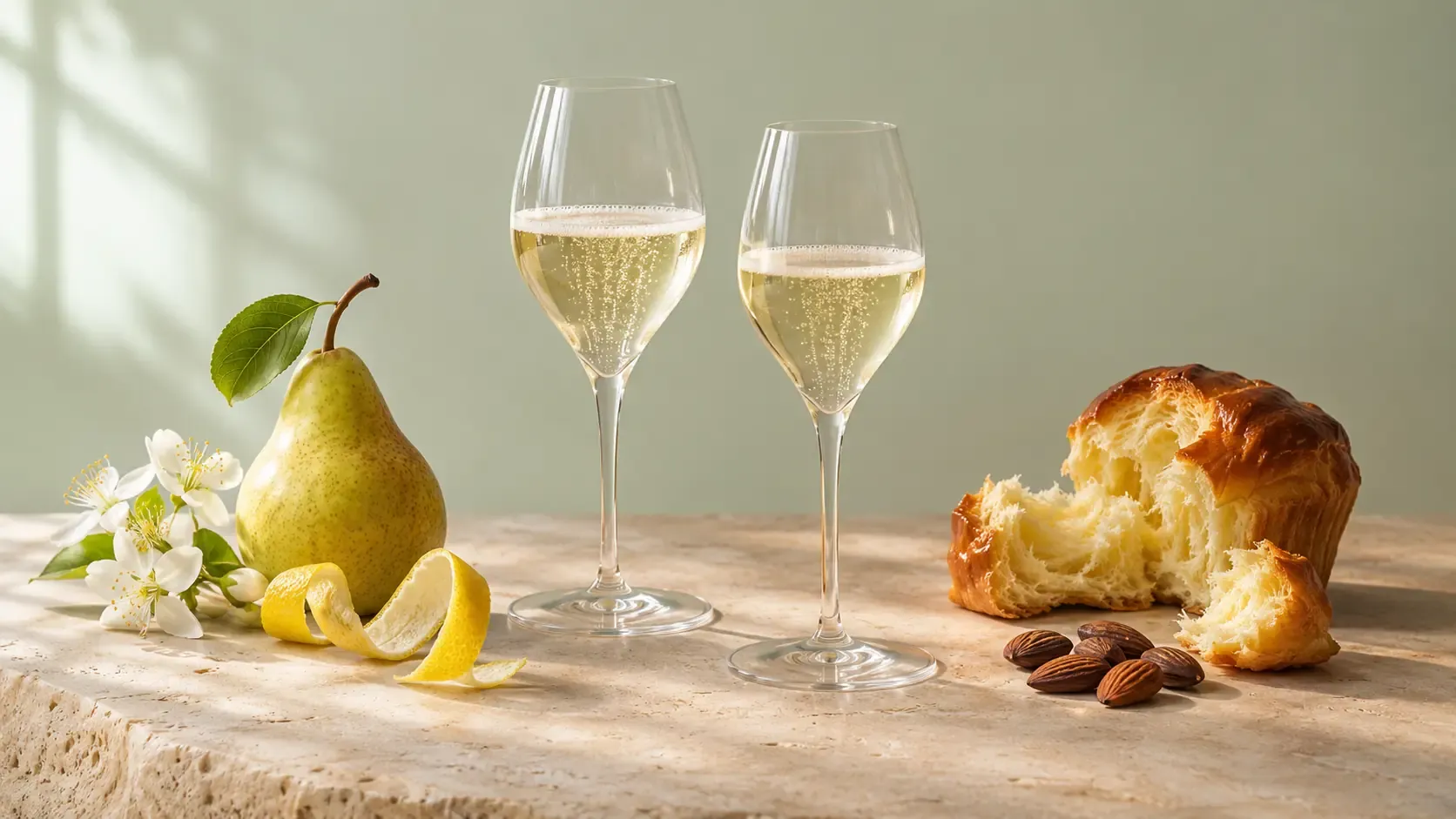
Two glasses of sparkling wine with pear, lemon peel and white blossoms on one side, and golden brioche and toasted almonds on the other.

The Hamptons Wine Guide

Champagne vs. Sparkling Wine: What’s the Difference?

Champagne, Prosecco and Cava can all make a celebration feel special, yet they offer different experiences in the glass. All Champagne is sparkling wine, but not all sparkling wine is Champagne. Champagne comes from the Champagne region of France and follows rules governing its origin and production. Sparkling wine is the broader category, encompassing Champagne and many other styles. Using the same grapes or production method elsewhere does not make a wine Champagne.

Beyond geography, the differences become practical: why does one bottle taste crisp and citrusy, another floral and fruity, and another creamy and reminiscent of freshly baked bread? Understanding those differences helps you choose a wine for your taste, food and occasion.

How should you serve sparkling wine to appreciate its flavor?

Whichever bottle you choose, give it a chance to show well. The Comité Champagne recommends serving Champagne around 46–50°F, or 8–10°C, and favors a tulip-shaped glass that allows aromas to develop. An ice bucket containing both water and ice helps chill the bottle effectively. Very cold wine can be refreshing, but it can also make aromatic differences harder to appreciate.

For outdoor entertaining in Palm Beach, keep the bottle chilled between pours and protect it from direct sun. Serve modest amounts so guests can enjoy the wine before it warms significantly.

At Hamptons Palm Beach, we can help you compare bottles by style, food pairing and budget. Explore our Champagne, Prosecco and sparkling wine collection, or tell us what you enjoy drinking and what you are planning to serve.

Can you tell Champagne, Prosecco and Cava apart in a blind tasting?

Sometimes, but aroma, texture and bubbles provide clues rather than proof of origin. Depending on the bottles selected, you may notice clear differences or substantial overlap. Traditional-method wines from different regions can share lees-derived aromas, so a bread or pastry note alone cannot identify Champagne.

A useful tasting exercise is to choose one Brut Champagne, one Brut Prosecco and one Brut Cava. Use the same glass shape and serve them at comparable temperatures. Ask someone to conceal the labels, then consider how the wines differ before attempting to identify them. Matching the sweetness designations helps keep a sweeter wine from becoming the obvious outlier, although Brut wines can still have different sugar levels.

Pay attention to the character of the fruit, the presence of bread or pastry aromas, the weight of the wine and how long the flavor lasts after swallowing. Record which you would enjoy on its own, which you would serve with food and which you would buy again. Those answers are useful even if you guess every region incorrectly. For a guided version, our private wine tastings offer a way to explore styles together.

Which sparkling wine should you choose for your occasion?

For a meal, let the dish help narrow the selection. A bright, dry sparkling wine is a useful starting point with shellfish, while a fuller, more mature bottle can be worth considering with richer dishes. For mimosas, prioritize a wine you enjoy with juice at a sensible mixing budget; subtle mature aromas may be harder to appreciate once the wine is mixed. These are starting suggestions, and the exact wine and preparation should guide the final match.

For a gift, consider the recipient's preferences as carefully as the label's recognition. A familiar Champagne house may be right for one person, while an enthusiast may enjoy discovering a less familiar producer. Our custom wine and Champagne gifting service can help connect the bottle, presentation and occasion.

What do blanc de blancs, blanc de noirs and rosé mean?

These terms describe the grapes or color of the wine. They do not tell you whether it is sweet, how long it has aged or whether it will suit your taste. Reading them alongside the producer and sweetness designation makes the label much more useful.

Blanc de blancs

Blanc de blancs means white wine made from white grapes. In Champagne, it usually means Chardonnay, although other permitted white varieties can be used. Chardonnay-based examples often emphasize citrus, freshness and finesse, with creamy or nutty complexity developing as they mature. The term on a sparkling wine from another region does not automatically guarantee the same grape or flavor profile.

Blanc de noirs

Blanc de noirs means white wine made from dark-skinned grapes. In Champagne, those grapes are Pinot Noir and/or Meunier. Gentle pressing and limited contact with the skins allow the juice to remain pale. These wines often have a fuller impression of body and structure, but producer style still matters; the label is a clue rather than a complete tasting note.

Rosé

Rosé Champagne can be made by blending white base wines with still red wine from Champagne, or by allowing juice to take color through contact with dark grape skins. Its color can range from pale pink to deeper shades. Rosé may be delicate or substantial, and a pink appearance does not mean a sweet wine. Check the sweetness designation separately.

How do you read a Champagne label?

Start with origin. The Champagne appellation identifies wine from Champagne, France, produced according to its rules. Names such as Prosecco DOC or a specific Crémant appellation identify different wines, even when the bottles share a familiar cork and wire cage.

One historical exception can confuse American shoppers: certain U.S. wines retain grandfathered permission to use “Champagne” under qualifying label approvals issued before March 10, 2006. A bottle labeled “California Champagne” is still wine from California, not from France’s Champagne appellation. Read the geographic origin as well as the familiar word.

Next, check sweetness. Brut indicates a lower sugar range than Extra Dry, despite how the names sound. Champagne labeled Brut contains less than 12 grams of sugar per liter, while Extra Dry falls between 12 and 17 grams. Demi-Sec is sweeter still. Acidity and the wine’s overall balance also influence how dry it tastes, so fruit aromas or pink color alone will not tell you its sweetness.

Finally, look for a vintage year and alcohol content. Vintage Champagne comes from a single harvest year, while non-vintage Champagne commonly blends wines from different years to achieve the intended style. Neither designation establishes a universal quality ranking. ABV, the alcohol-by-volume figure, is worth checking when comparing bottles; the category name alone does not tell you which wine is stronger.

As you explore individual producers, our grower Champagne collection offers another starting point for discovering bottles beyond the most familiar house names.

Does sparkling red wine exist?

Yes. Sparkling wine can be red as well as white or rosé. Lambrusco is a useful place to start: its different appellations and grapes produce wines ranging from pale and delicate to deeply colored, and from dry to sweet. A dry Lambrusco can be an appealing choice when you want refreshing bubbles alongside salumi, pizza or other savory food.

Its existence also highlights why sparkling wine should not be treated as one uniform taste. Red fruit, tannin and a different balance of acidity can create an experience far removed from either Prosecco or Champagne. If you have disliked one sparkling wine, there may still be an entirely different style that suits you.

How are sparkling wine bubbles made?

During fermentation, yeast converts sugar into alcohol and carbon dioxide. Winemakers can retain that gas in the wine under pressure to create bubbles. Where fermentation happens, and what follows it, influences flavor and texture. Both bottle fermentation and tank fermentation can create bubbles naturally; tank-made wine is not necessarily still wine with gas injected into it.

The traditional method

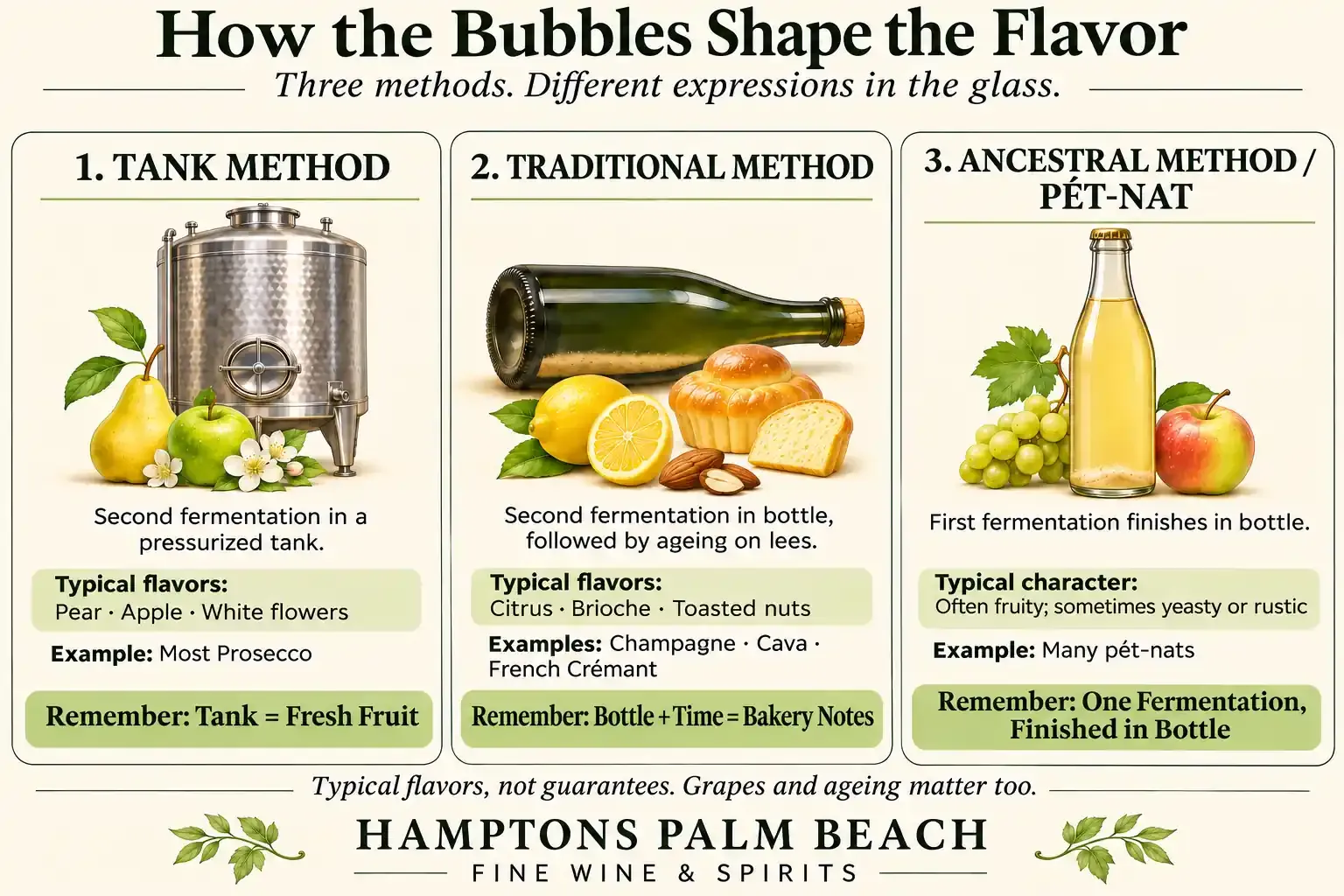
For Champagne, Cava and many other traditional-method wines, production begins with a still base wine. A measured addition of yeast and sugar starts a second fermentation inside the sealed bottle. After fermentation, the wine rests with the spent yeast cells, known as lees, before the sediment is collected and removed through disgorgement.

Time on the lees helps explain the bread, biscuit and pastry character found in many mature examples. Non-vintage Champagne requires at least 15 months of maturation before release, including at least 12 months on the lees; vintage Champagne requires at least three years of maturation. Producers often exceed these minimums. Those rules describe preparation before sale, not how long you must keep a purchased bottle before opening it.

The tank method

For most Prosecco, the second fermentation takes place in a sealed, pressurized tank. The wine is then bottled under pressure to retain its effervescence. This approach generally prioritizes the grape's fresh aromatic character and allows production on a shorter timetable than extended bottle ageing.

The ancestral method and pét-nat

Ancestral-method wines are bottled before their first fermentation has finished, allowing the remaining fermentation to create bubbles in the bottle. Pét-nat, short for pétillant naturel, is a familiar contemporary expression of this approach. Depending on the producer, a bottle may contain visible sediment and show a softer or less predictable effervescence.

Pét-nat describes a production approach rather than a geographic appellation. It is not a synonym for Champagne or Prosecco. Some Prosecco styles, including Sui Lieviti, also undergo fermentation in bottle, but that alone does not make them ancestral-method wines. The key distinction is whether the wine finishes its first fermentation in bottle or undergoes a separate second fermentation. Check the producer’s description rather than assuming every cloudy sparkling wine is pét-nat.

Tank, traditional and ancestral sparkling-wine methods compared, with typical flavors and memory tips. The methods are explained in the preceding text.
Production methods at a glance. View full-size infographic (opens in a new tab).

What I learned tasting two Laurent-Perrier Grand Siècles

During a tasting conducted with Laurent-Perrier’s U.S. brand ambassador, I tried two releases of Grand Siècle that showed me how blending and maturation shape the wine in the glass.

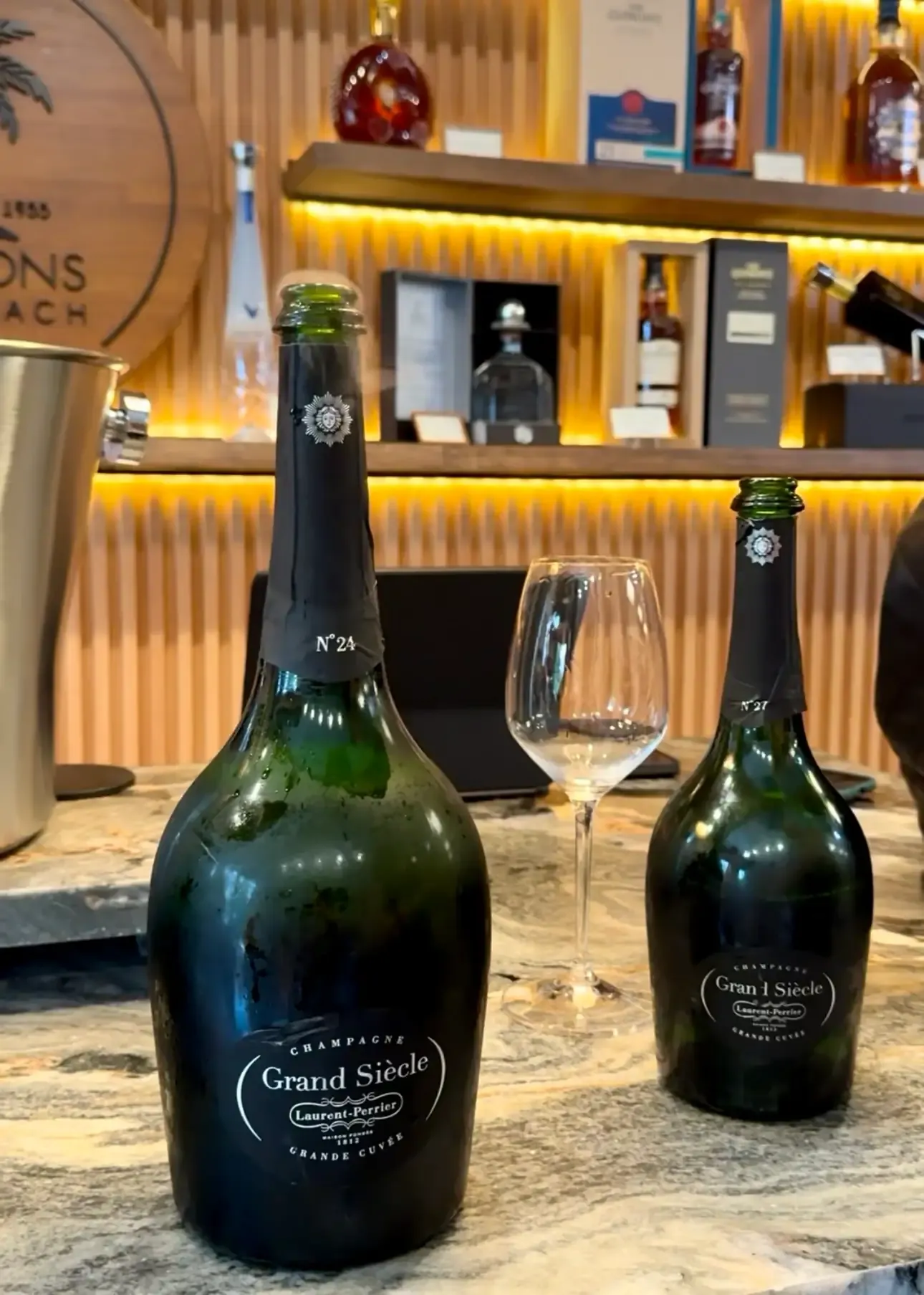
The magnum was Iteration Nº24, blending the 2007, 2006 and 2004 harvests. To me, it showed coffee, caramel and toasted notes. Then I tried the 750ml Iteration Nº27, blending 2015, 2013 and 2012. Its personality felt completely different: citrus and fresh orange were what stood out to me.

Laurent-Perrier Grand Siècle Nº24 magnum and Nº27 bottle beside a tasting glass at Hamptons Palm Beach
From my Laurent-Perrier Grand Siècle tasting with the U.S. brand ambassador.

Both follow Grand Siècle’s philosophy of blending three harvests, but they are different compositions. Laurent-Perrier lists the Nº24 magnum as 55% Chardonnay and 45% Pinot Noir, with 14 years of ageing on lees. Nº27 is 60% Chardonnay and 40% Pinot Noir, with 10 years on lees. Those details helped put the contrast I tasted into context.

I also learned that Champagne generally develops more slowly in a magnum than in a standard bottle. That does not mean the coffee and caramel notes came from the larger format: we were tasting different blends with different ageing histories, so this was not a comparison of bottle size alone.

What stayed with me was how much variation could exist within one Champagne name. When someone asks whether Champagne tastes citrusy or toasty, my answer is that it can offer either impression, and sometimes both. The particular release matters much more than a broad description on its own.

Why does Champagne usually cost more?

Champagne's price reflects several things at once: grapes from a defined origin, the work involved in bottle fermentation, time spent maturing wine before release, and the demand attached to a producer or cuvée. Holding bottles in a cellar for years also ties up space and capital. Prestige and scarcity can add further premiums.

A higher price is therefore not a simple measurement of how much you will enjoy a wine. Someone seeking floral freshness may prefer a carefully chosen Prosecco to a more expensive Champagne dominated by mature, savory flavors. Someone who loves layered texture and toasted notes may find that a longer-aged bottle justifies the additional cost.

When comparing prices, ask what the additional cost gives you in that specific bottle, whether it is a flavor profile, provenance or rarity that matters to you.

How do Champagne, Prosecco and Cava compare?

These three names identify wines with different origins and production traditions. Champagne and Cava use a second fermentation inside individual bottles. Most Prosecco develops its bubbles in a pressurized tank. Their grapes also differ, which helps explain why the wines can remain recognizable even when their sweetness levels are similar.

On smaller screens, scroll the table horizontally to compare all four columns.

Champagne and other sparkling wines at a glance
WineOriginUsual production methodTypical character
ChampagneChampagne, FranceTraditional methodBright acidity; citrus and orchard fruit; potentially bread, toast and nutty complexity
ProseccoNortheastern ItalyTank methodPear, apple and floral aromas; a fresh, fruit-focused style
CavaDesignated areas of Spain, largely CataloniaTraditional methodCitrus and orchard fruit; potentially savory, almond and pastry notes
French CrémantNamed French regional appellations outside ChampagneTraditional methodVaries with the region and grapes; often combines fresh fruit with creamy texture

These are starting points, not promises about every bottle. Producer choices, grape varieties, sweetness and time spent ageing can matter as much as the category name.

Champagne

Champagne's cool growing region and its principal grapes, Chardonnay, Pinot Noir and Meunier, help shape its freshness and structure. Many examples combine apple or citrus flavors with a savory depth that develops through maturation. Some emphasize delicacy and chalky freshness; others are broader and more vinous, with the weight to accompany a meal. A familiar house name tells you where to start, but the individual cuvée determines the experience.

Prosecco

Prosecco comes from northeastern Italy and is made primarily from Glera. Its appeal often lies in aromatic fruit and freshness, with pear, apple and floral notes more prominent than the toasted flavors associated with long-aged Champagne. That fruitiness does not automatically mean sweetness. A Prosecco labeled Brut can smell generous and fruity while finishing dry.

There is also meaningful variety within Prosecco. Conegliano Valdobbiadene Prosecco Superiore DOCG comes from a defined hillside area and deserves attention if you want to explore beyond the most familiar everyday bottlings. For an example of the broader category, Syltbar Prosecco illustrates a Glera-based wine from Friuli-Venezia Giulia.

Cava

Cava is Spanish sparkling wine made by the traditional method. Macabeo, Xarel·lo and Parellada are central to many classic blends, although other authorized grapes also appear. Because Cava undergoes bottle fermentation and maturation on its yeast sediment, it can offer some of the savory texture that Champagne drinkers enjoy while retaining a distinct identity.

Cava can be particularly useful when you want traditional-method wine for a dinner or gathering without choosing Champagne. Provocativo Cava Brut is one example in our collection.

Where does Crémant fit?

French Crémants, including Crémant d'Alsace, Crémant de Loire and Crémant de Bourgogne, are another route into traditional-method sparkling wine. Their regional grapes and rules create different expressions. Crémant is not a generic name for every French sparkling wine made outside Champagne; it refers to particular appellations. If you enjoy the texture of bottle-fermented bubbles, it is a useful name to recognize when exploring other regions.

What about American sparkling wine?

American sparkling wine also deserves a place in the comparison. California producers such as Mumm Napa make traditional-method wines using grapes including Chardonnay and Pinot Noir. These bottles can share production techniques with Champagne while expressing a different origin and the producer’s own style. For a U.S. shopper, they offer another category to explore alongside Champagne, Prosecco, Cava and Crémant. Compare the individual wine’s grapes, method and tasting profile rather than assuming that an American origin determines its quality or sweetness.

Sincerely yours,

Hamptons Team

More Posts

<p>Best White Burgundy for Beginners: How to Choose Your First Bottle</p><p>Best White Burgundy for Beginners: How to Choose Your First Bottle</p>

Best White Burgundy for Beginners: How to Choose Your First Bottle

White Burgundy is one of the most rewarding wines to discover, but choosing your first bottle can feel intimidating. The good news is that you don't need an expensive Grand Cru or years of wine knowledge to appreciate Burgundy Chardonnay.

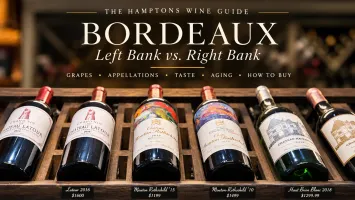
Left Bank vs. Right Bank Bordeaux: Which Red Wine Should You Buy?Left Bank vs. Right Bank Bordeaux: Which Red Wine Should You Buy?
Left Bank vs. Right Bank Bordeaux: Which Red Wine Should You Buy?

Cabernet Sauvignon or Merlot? Discover how Bordeaux's two banks differ in flavor, structure, aging potential, and value—and how to choose the right bottle.

<p>How Do Eastern and Western Drinking Cultures Differ?</p><p>How Do Eastern and Western Drinking Cultures Differ?</p>

How Do Eastern and Western Drinking Cultures Differ?

To a classical European collector, a $3,000 bottle of Grand Cru Burgundy demands a slow, deliberate courtship. It is a ritual of oversized crystal stemware, subtle nods, and quiet reverence as notes of black cherry and wild truffle unfold over hours.


Across the globe, however, that exact same bottle meets a very different fate.


The glass is still fine crystal, and the initial pour still carries the romance of a first date—swirling, sniffing, and admiring the vintage. But as the banquet progresses, an unspoken rule takes hold: every drop must disappear, usually in a sped up fashion. Quiet contemplation gives way to spirited toasts, and delicate sipping turns to gulping. In Chinese dining culture, this is gan bei (干杯 "bottoms up")—a social commitment to empty your glass, honor your host, and celebrate togetherness.


To anyone trained in traditional wine service, this collision of luxury and speed breaks the textbook and gives sommeliers hives. Yet, having spent years in Asia before specializing in fine wine on Palm Beach Island, I view that drained glass differently. Where one culture sees a missed tasting note, another sees an unmistakable gesture of camaraderie and respect.

<p>The Gravity of the Tin: Why You Need to Stop Rationing Caviar</p><p>The Gravity of the Tin: Why You Need to Stop Rationing Caviar</p>

The Gravity of the Tin: Why You Need to Stop Rationing Caviar

We have all been there. You know caviar as the polite dollop resting on a cold blini, or a decorative garnish on a catering platter. It was salty, it was fancy, and it was over in a single, fleeting bite. You walk away thinking, “It’s good... but is it really worth the hype?”


I used to think the exact same thing. In fact, I completely wrote caviar off for years. Growing up, my grandmother would tell me stories that sounded like pure mythology:


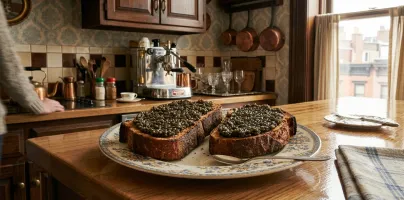
"Back in the '80s, my absolute favorite afternoon snack was two warm slices of bread, spread with a thick, glistening layer of Caspian Beluga caviar. Especially when I was pregnant with your dad, I would finish lunch and just count down the minutes until 4:00 PM so I could have my daily treat. It was my happiest ritual."


For decades, she dreamed of those days. And for decades, I didn’t quite get it, because what she casually enjoyed had become completely impossible.


To put her daily habit into perspective: during the famous "Beluga Caviar War" of 1983 between Zabar's and Macy's in New York, a massive 14-ounce tin of wild Caspian Beluga retailed for around $119. Even with inflation, that’s about $380 in today’s money.


Today, if you wanted to buy a 14-ounce tin of purebred Beluga to casually spread on your afternoon toast, it would set you back nearly $4,000. Unless you have a casual quarter-million-dollar annual grocery budget, nobody is eating pure Beluga on a daily basis anymore.


But it wasn't just the price that made it impossible—the legendary quality itself had vanished.
<p>The Palm Beach Corkage Guide: Fees, Etiquette, and the Best BYOB Policies on the Island</p><p>The Palm Beach Corkage Guide: Fees, Etiquette, and the Best BYOB Policies on the Island</p>

The Palm Beach Corkage Guide: Fees, Etiquette, and the Best BYOB Policies on the Island

Around here, we are no strangers to precision when it comes to wine. At our Palm Beach boutique, our days are spent curating cases for everything from elegant backyard luncheons to grand weddings at the Flagler Museum. But just as often, the assignment is beautifully simple: a regular walks through our doors looking for that one perfect bottle to bring out to dinner that very evening.


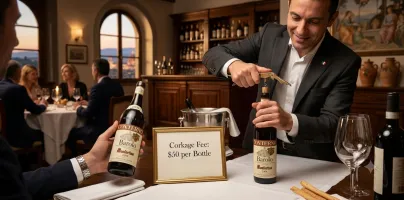
Historically, taking a bottle from your cellar to a local dining room came with a side of guesswork, as corkage policies varied wildly by doorstep. That baseline is shifting toward welcome clarity. With Florida’s landmark SB 606 fee transparency law now in effect as of July 1, 2026, automatic operations charges must be clearly itemized on menus and receipts. Under this new legislation, restaurants provide upfront notice of their exact corkage fees, removing the mystery for collectors before the first cork is even pulled.


As the law brings these fee structures into the light, there has never been a better time for our community of collectors to brush up on the unspoken etiquette of BYOB. Done right, corkage isn't just a transaction—it’s a dynamic, two-way dialogue between an engaged diner and a world-class hospitality team, turning the bottle you meticulously selected into a shared conversation.


"Corkage gives restaurants an unexpected window into what guests are excited enough to purchase for themselves or gift to others," notes Megan, Sommelier at Harry’s West Palm Beach. "It helps us understand evolving tastes and can even influence future decisions about what deserves a place on the wine list."