Champagne vs. Sparkling Wine: What’s the Difference?
Discover how Champagne differs from Prosecco, Cava and other sparkling wines in origin, grapes, flavor and price—and choose a bottle for your occasion.
A $30 white Burgundy can be a satisfying dinner wine. A $100 bottle may offer more detail, a longer finish, or a vineyard character worth exploring. The difficult part is knowing whether the extra money buys something you will appreciate.
Finding value means looking beyond the price and the most prestigious words on the label. The useful questions are: how good is the wine, what explains its price, and does it suit what you want to drink?
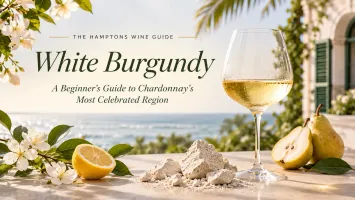
This guide examines what makes a good white Burgundy, when Premier Cru deserves a closer look, where to search for value, and which bottles in our selection fit a budget under $35. For an introduction to the region and its styles, start with our White Burgundy guide for beginners.
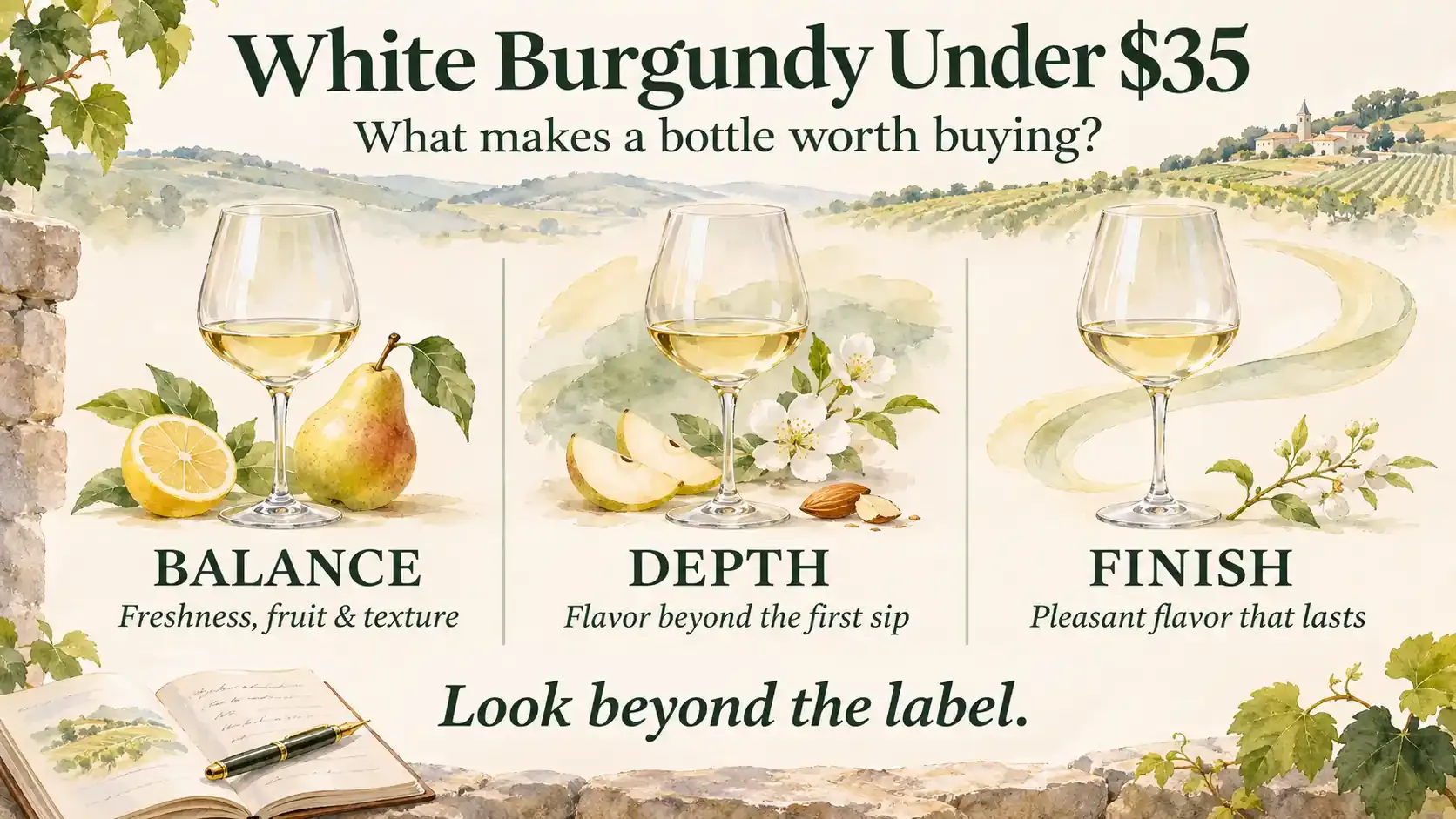
A good white Burgundy should offer more than an attractive aroma or a famous appellation. Look at how the wine carries its flavor from the first sip through the finish.
Four useful quality indicators are balance, intensity, complexity, and length. These are also the criteria used in WSET’s wine-quality assessment.
| What to assess | What to look for in the glass |
|---|---|
| Balance | Fruit, acidity, alcohol, and any oak work together without one overwhelming the rest. |
| Intensity | Clear flavor continues through the sip, rather than fading after an appealing first impression. |
| Complexity | Several distinguishable aromas or flavors add interest. |
| Length | Pleasant flavors persist after swallowing; lingering acidity or alcohol heat alone is not a long finish. |
A bigger wine is not automatically a better wine. A restrained Chardonnay can have excellent flavor intensity without feeling heavy. Likewise, obvious vanilla or toast is not proof of complexity.
Separate quality from preference, too. You can recognize that a wine is well made while wishing it were richer, fresher, or less oaky. Value requires both: enough quality to justify the price and a style you actually want to drink.
For a simple dinner, a fresh, balanced wine may deliver everything you need. For an evening spent paying attention to the glass, additional layers and persistence may make a more ambitious bottle worthwhile.
Wine prices reflect more than what reaches your palate. Vineyard and winery costs, maturation, transportation, importation, distribution, supply, and demand all contribute.
The practical consequence is that price and classification do not rise in a neat sequence.
For example, our selection lists 2023 Domaine Antoine Jobard Bourgogne Blanc at $79.99, while 2023 Domaine de la Denante Pouilly-Fuissé is listed at $29.98. The broader regional designation costs more in this comparison. That does not establish which bottle tastes better; it shows why the classification alone cannot answer the value question.
The same principle applies when comparing producers. A regional wine from a highly sought-after name may be a less accessible purchase than a Village wine from another estate. The producer’s entry point is not necessarily the least expensive route to the style you enjoy.
Before paying a premium, ask what you expect in return. Is it more complexity? A particular vineyard? A producer whose wines you consistently enjoy? A bottle intended to develop in your cellar? Those are different reasons to buy, and they deserve different comparisons.
Premier Cru identifies classified vineyard land within a Village appellation. It tells you something important about the grapes’ origin; it is not a tasting score awarded separately to every finished bottle.
Burgundy’s vineyard distinctions reflect differences between sites. Soil, exposure, topography, and water conditions help shape the growing environment. The grower and winemaker then influence how that site is expressed.
What might justify the upgrade? Look for greater depth through the palate, additional aromatic detail, a more persistent finish, or a distinctive character that rewards attention. Development potential can also matter if you intend to keep the bottle. The official Chablis Premier Cru profile emphasizes structure, complexity, length, and differences between individual sites.
These are qualities to investigate, not guaranteed improvements in every comparison. A Village wine can be an excellent purchase, and Premier Cru does not remove the need to consider producer, vintage, condition, and readiness to drink.
Consider a concrete spending decision: 2023 Domaine de la Meulière Chablis is listed at $32.99, while 2024 Louis Robin Chablis Premier Cru “Vosgros” is $49.99. The extra $17 creates a manageable opportunity to explore a classified site.
It does not isolate the effect of classification: the producer and vintage also change. For a more informative comparison, try Village and Premier Cru wines from the same producer and year when possible, while allowing for differences in how they were made.
The upgrade is most useful when you can explain what you gain. “The flavor stays with me longer, and I enjoy the additional detail” is a stronger reason to spend more than “Premier Cru must be better.”
Start by broadening the search, then narrow it to actual bottles. An appellation can be a useful place to investigate without every wine carrying its name being a bargain.
| Place to explore | What makes it worth investigating |
|---|---|
| Mâconnais | Compare producers and individual bottlings across Mâcon-Villages, named origins such as Mâcon-Verzé, and the area’s Village appellations. |
| Saint-Véran | Its official profile combines orchard fruit and floral aromas with freshness and rounded texture. |
| Rully and Montagny | Both offer Chardonnay at Village and Premier Cru levels in the Côte Chalonnaise. |
| Saint-Romain and Pernand-Vergelesses | Add these Côte de Beaune appellations to your comparisons instead of restricting your search to Meursault, Puligny, and Chassagne. |
| Saint-Aubin | Investigate Village and Premier Cru wines near Puligny and Chassagne, checking the particular producer and price. |
| Chablis | Compare Village wines with selected Premier Cru bottlings according to the style, vineyard, and budget you want to explore. |
Within our selection, 2022 Domaine Rapet Pernand-Vergelesses Blanc “Les Combottes” at $69.99 gives readers a specific Côte de Beaune bottle to investigate beyond the most familiar names.
At a higher budget, 2024 Marc Colin Saint-Aubin Premier Cru “Sous Roche Dumay” is listed at $99.99. That is a useful reminder to treat Saint-Aubin as a place to compare wines thoughtfully, rather than assuming its bottles will always be inexpensive.
Neither listing proves that the wine outperforms a more famous neighbor. The value judgment comes from the particular bottle and its alternatives, rather than the village name alone.
Yes, but it helps to discover what sits behind that label: where the grapes grow, which producer makes the wine, and how the particular cuvée is handled.
2024 Chavy-Chouet Bourgogne Blanc “Les Femelottes,” listed at $38.99, provides a concrete example.
The producer places its parcel in Puligny-Montrachet, alongside the Village appellation. Its technical sheet identifies approximately 40-year-old Chardonnay vines and ten months of aging with 10% new barrels.
Those details give you a reason to investigate the wine beyond its broad Bourgogne designation. They do not turn it into Puligny-Montrachet appellation wine or establish that it tastes equivalent to Premier Cru.
That distinction matters when looking for value. A documented vineyard origin can make a regional bottle interesting without needing to sell it as a cheaper version of something else.
The useful question is whether this particular wine gives you the character and enjoyment you want at its price. Its location is part of the explanation, not a substitute for the wine in the glass.
With a firm $35 ceiling, focus on a small number of actual bottles rather than trying to imitate the region’s most expensive wines.
These three options from our selection give you different ways to use that budget. The style descriptions below summarize our current bottle listings:
| Wine | Listed price | Why consider it? |
|---|---|---|
| 2024 Domaine de la Denante Mâcon-Verzé | $19.98 | Orchard fruit, supple texture, and freshness at the lowest price in this shortlist. |
| 2024 Verget Mâcon-Villages Grand Élevage | $29.99 | Rounded texture and gentle oak for readers seeking more breadth. |
| 2023 Domaine de la Meulière Chablis | $32.99 | Citrus, lively acidity, and a stainless-steel-fermented alternative to the oak-influenced option. |
For a creamy dish, Verget is the natural candidate to discuss with our team; for a brighter wine alongside simply prepared seafood, ask about Domaine de la Meulière. If the priority is keeping the cost closer to $20, Denante deserves attention. These are buying suggestions based on the listed profiles, rather than a ranking from a side-by-side tasting.
Choose by describing what you want from the bottle: a rounded texture, lively freshness, restrained oak, or a wine for a particular dish. Then ask which of the current options best meets that brief. A price limit makes the search more focused; it does not require every recommendation to taste alike.
And if you are hoping for “Premier Cru quality under $35,” identify the qualities you mean. Balance, depth, and a satisfying finish are reasonable things to seek. An identical experience to a specific Premier Cru vineyard is a much larger promise, and one we would not attach to these wines simply because they offer affordable choices.
Listed prices were checked November 16, 2026, before tax and any applicable delivery or shipping charges. Prices and availability can change.
Spend more when you have a clear reason to expect something you will value: additional complexity, a particular vineyard’s character, a producer you want to explore, or development potential suited to your plans.
Before upgrading, ask:
A modestly priced wine can be the right choice for a relaxed dinner. A more detailed bottle can justify a higher budget when the wine is part of the occasion. Neither purchase needs to imitate the other.
Explore our White Burgundy collection, or tell our team your budget, what you plan to serve, and a bottle you have enjoyed. Those details help us recommend where to spend—and where you can find what you want for less.
The Palm Beach Corkage Guide: Fees, Etiquette, and the Best BYOB Policies on the Island
Around here, we are no strangers to precision when it comes to wine. At our Palm Beach boutique, our days are spent curating cases for everything from elegant backyard luncheons to grand weddings at the Flagler Museum. But just as often, the assignment is beautifully simple: a regular walks through our doors looking for that one perfect bottle to bring out to dinner that very evening.
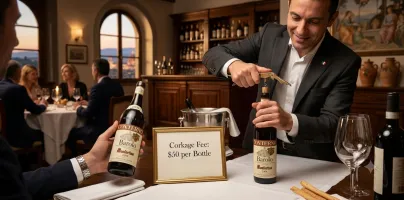
Historically, taking a bottle from your cellar to a local dining room came with a side of guesswork, as corkage policies varied wildly by doorstep. That baseline is shifting toward welcome clarity. With Florida’s landmark SB 606 fee transparency law now in effect as of July 1, 2026, automatic operations charges must be clearly itemized on menus and receipts. Under this new legislation, restaurants provide upfront notice of their exact corkage fees, removing the mystery for collectors before the first cork is even pulled.
As the law brings these fee structures into the light, there has never been a better time for our community of collectors to brush up on the unspoken etiquette of BYOB. Done right, corkage isn't just a transaction—it’s a dynamic, two-way dialogue between an engaged diner and a world-class hospitality team, turning the bottle you meticulously selected into a shared conversation.
"Corkage gives restaurants an unexpected window into what guests are excited enough to purchase for themselves or gift to others," notes Megan, Sommelier at Harry’s West Palm Beach. "It helps us understand evolving tastes and can even influence future decisions about what deserves a place on the wine list."